What to Wear for a Business Portrait: Tips for a Professional Look
Learn what to wear for a business portrait and how to choose outfits that create a professional look for LinkedIn, CV, and personal branding.
Date
/
Category
Portrait
Portrait
/
Writer
Milos Bulatovic
Milos Bulatovic
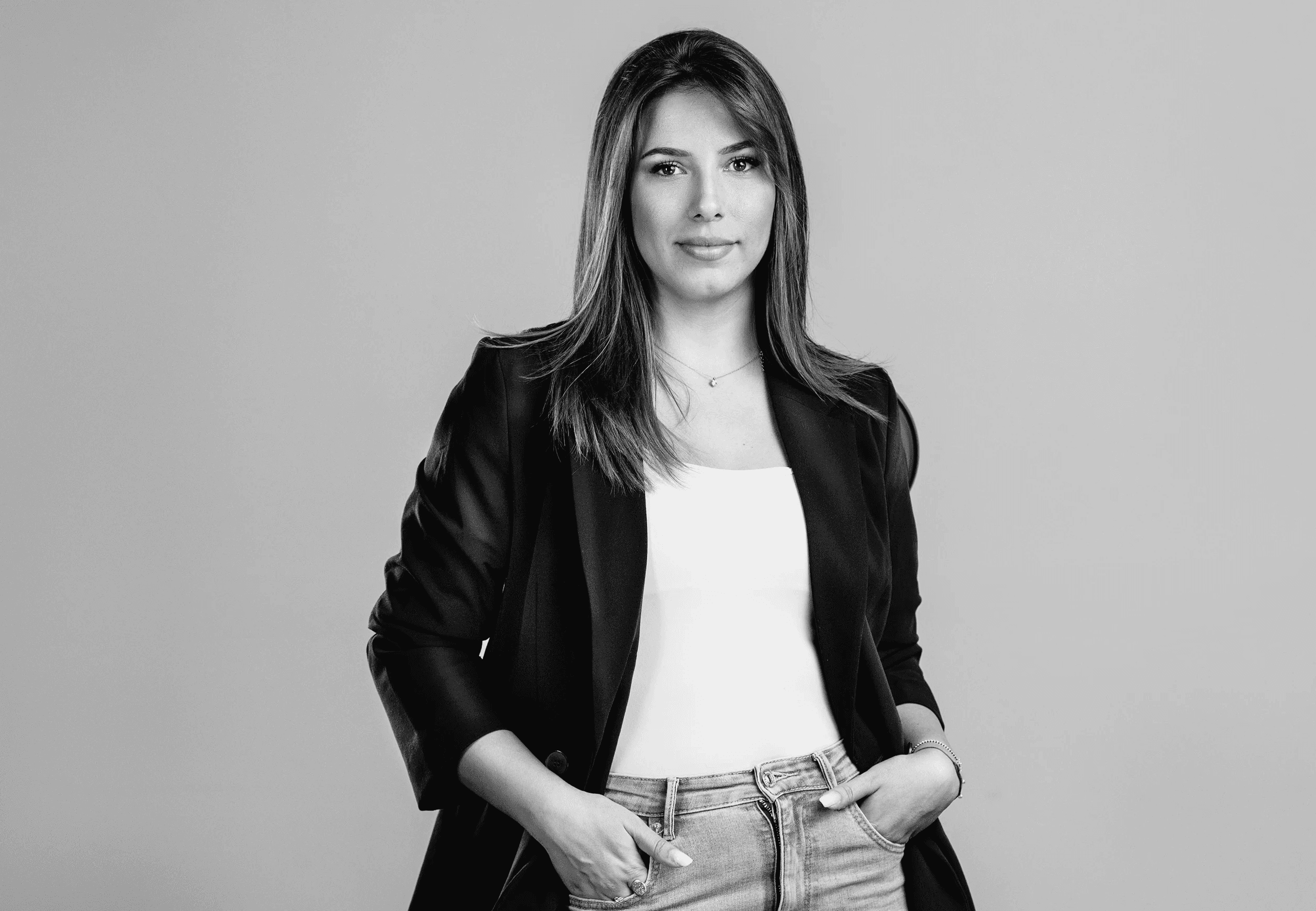
Business portraits are most often used on company websites, LinkedIn profiles, in presentations, and in everyday professional communication. That means the first impression is often formed based on your photo.
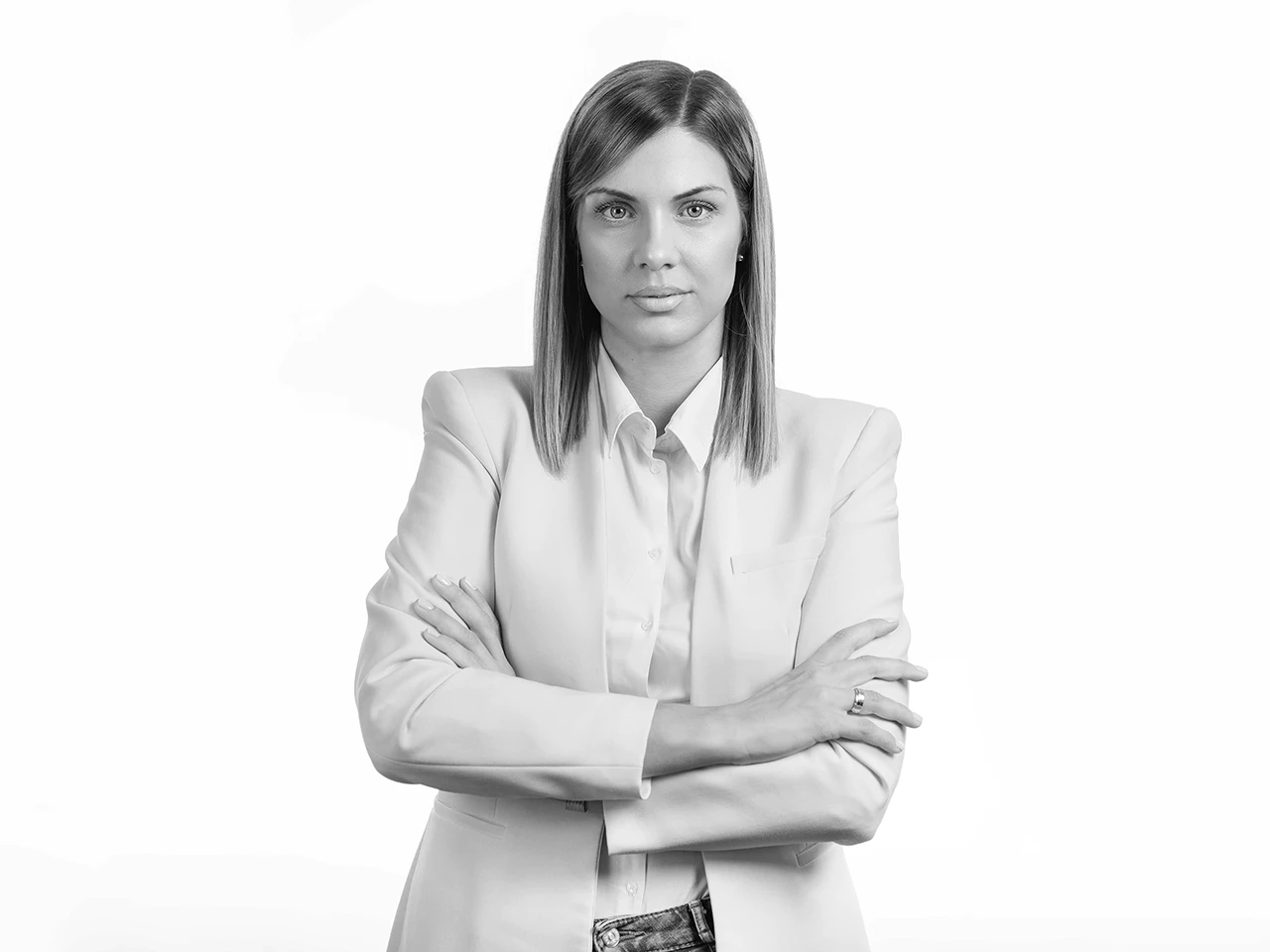
Your choice of wardrobe is not just an aesthetic decision. It directly influences how people perceive you. Good clothing should not draw attention to itself, but support a professional impression and keep the focus on you.
Below are practical tips to help you choose an outfit that looks natural, polished, and professional on camera.
How to Choose an Outfit for a Business Portrait
This is where most people have the wrong idea. What looks good in real life does not always translate well in a photo. Most people want the same thing: to look professional but not stiff, and to leave a strong first impression without overthinking every detail.
A professional look is less about trends or fashion and more about a clean, balanced, and understated appearance that does not distract. The easiest way to approach it is through a few simple principles:
Simple and Proven Combinations
Clothing without bold patterns, complex cuts, or too many details creates a cleaner and more stable look in photos.
Classic shirts, blazers, blouses, and simple pieces almost always work better than trend driven outfits.
Neutral and Calm Colors
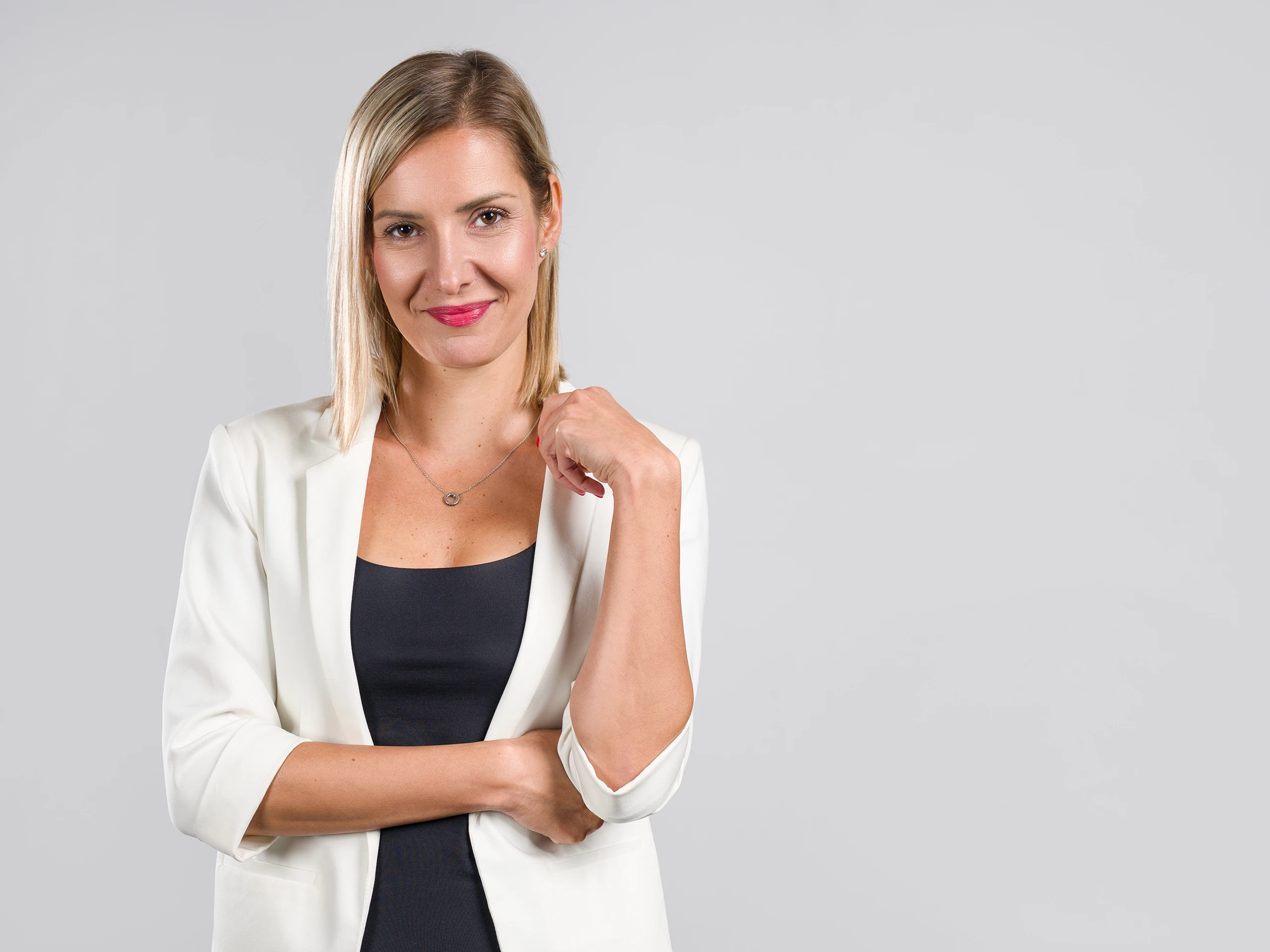
White, gray, navy, black, and beige are the safest choices because they keep the focus on your face.
If you want a bit more variation, softer tones like light blue, olive, or burgundy work well, but avoid fluorescent or overly bright colors.
Proper Fit and Cut
Clothing should follow your body shape without being too tight or too loose.
Poor fit is immediately noticeable in photos. Clothes that are too loose can look untidy, while overly tight pieces often appear unnatural and uncomfortable.
Clothing That Does Not Dominate
The goal is not for your outfit to be the main focus of the photo.
A good choice is one you do not think about while being photographed, allowing you to naturally focus on how you present yourself in the frame.
Details That Make a Difference in a Business Portrait
This is where the difference between an average and a truly strong photo is made. It is not about major changes, but small details that affect how clothing looks on camera.
Pay Attention to Wrinkles
Before the shoot, straighten your blazer, shirt, or blouse and check how it sits on your body. The camera often emphasizes creases and imperfections that are barely noticeable in real life.
Collars, Necklines, and Clothing Lines
Shirt collars, necklines, and blazer lines should be neat and symmetrical. Even small misalignments are easy to spot in photos.
Layering and Combining Pieces
If you are wearing multiple layers, make sure everything sits smoothly without twisting. Poorly arranged layers can look messy and distracting.
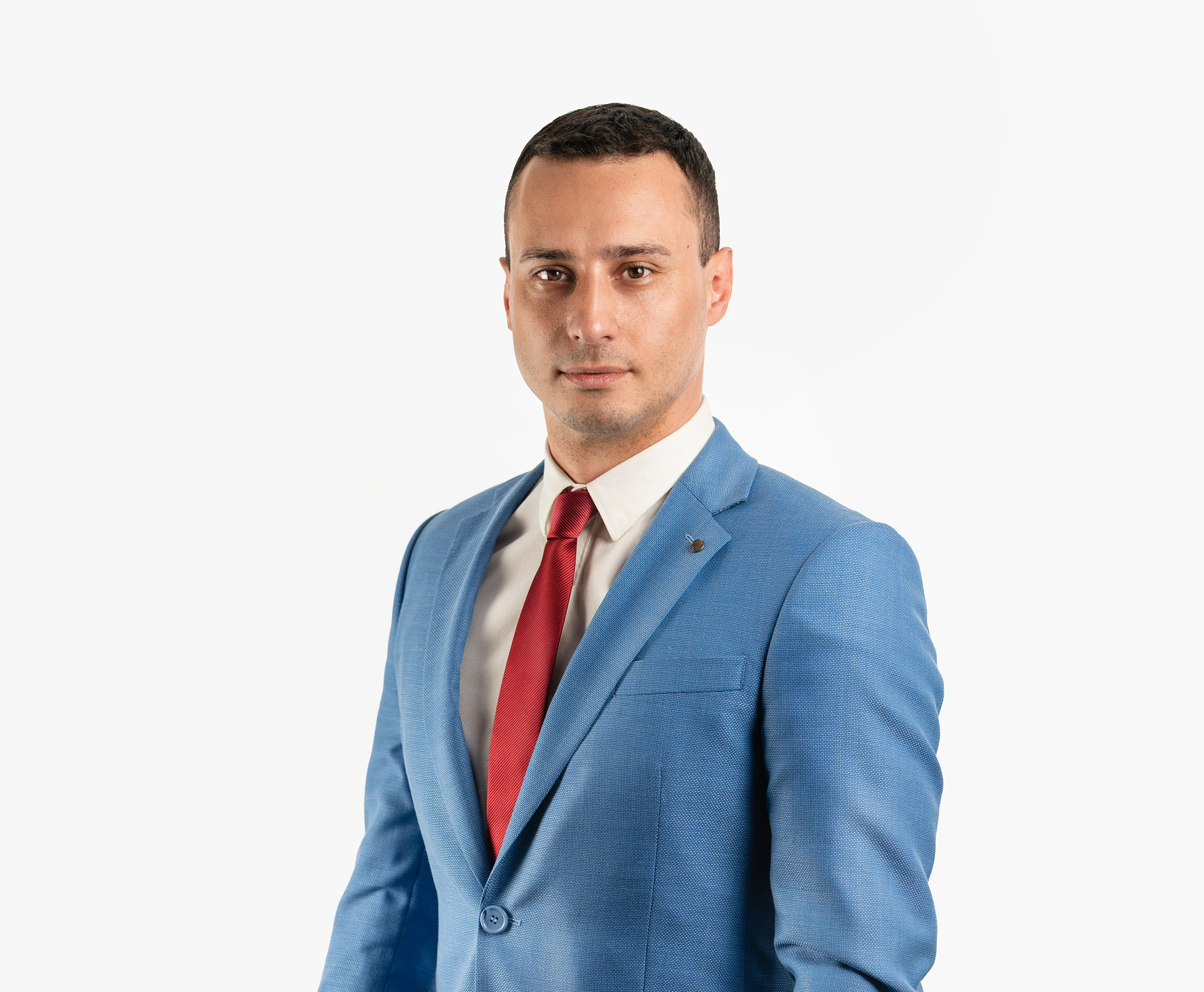
Subtle Details Instead of Dominant Elements
A simple watch, a slim belt, discreet jewelry, or clean buttons often create a better impression than bold fashion statements. The goal is refinement, not dominance.
Fabric Texture
Natural materials such as cotton, fine wool, and linen usually work better than shiny or synthetic fabrics, which can reflect light in unpredictable ways.
Clothing is just one part of the preparation. Take a look at our complete guide to preparing for a business photoshoot.
Common Mistakes That Ruin a Business Portrait
When preparing for a business photoshoot, the same mistakes appear frequently and can easily affect the overall impression.
Clothing That Does Not Work on Camera
Outfits that look perfectly fine in real life often appear too casual or lack structure in photos.
Relying on Informal Photos
Photos from social events, private situations, or spontaneous moments may feel natural, but they do not convey the level of professionalism expected from a business portrait.
Distracting Details
Bold jewelry, sunglasses, overly dominant fashion elements, or anything that covers the face takes attention away from the most important part of the image, your expression.
Overstyling and Overposing.
When styling or posing is overdone, the result often looks stiff and unnatural.
Forgetting the Purpose of the Photo
This is not a fashion shoot. A business portrait is meant to create a clear, confident, and professional impression.
Business Portraits for LinkedIn, CV, and Company Websites
Your outfit should match the context in which the photo will be used.
LinkedIn profiles, CVs, company websites, and business presentations all require a consistent and professional visual identity.
That is why business portraits are not just nice photos. They are a tool that helps you make a stronger first impression and build trust.
If you want a photo that represents you or your team professionally, business portraits are the most reliable long term solution.
When to Leave Business Portraits to a Professional Studio
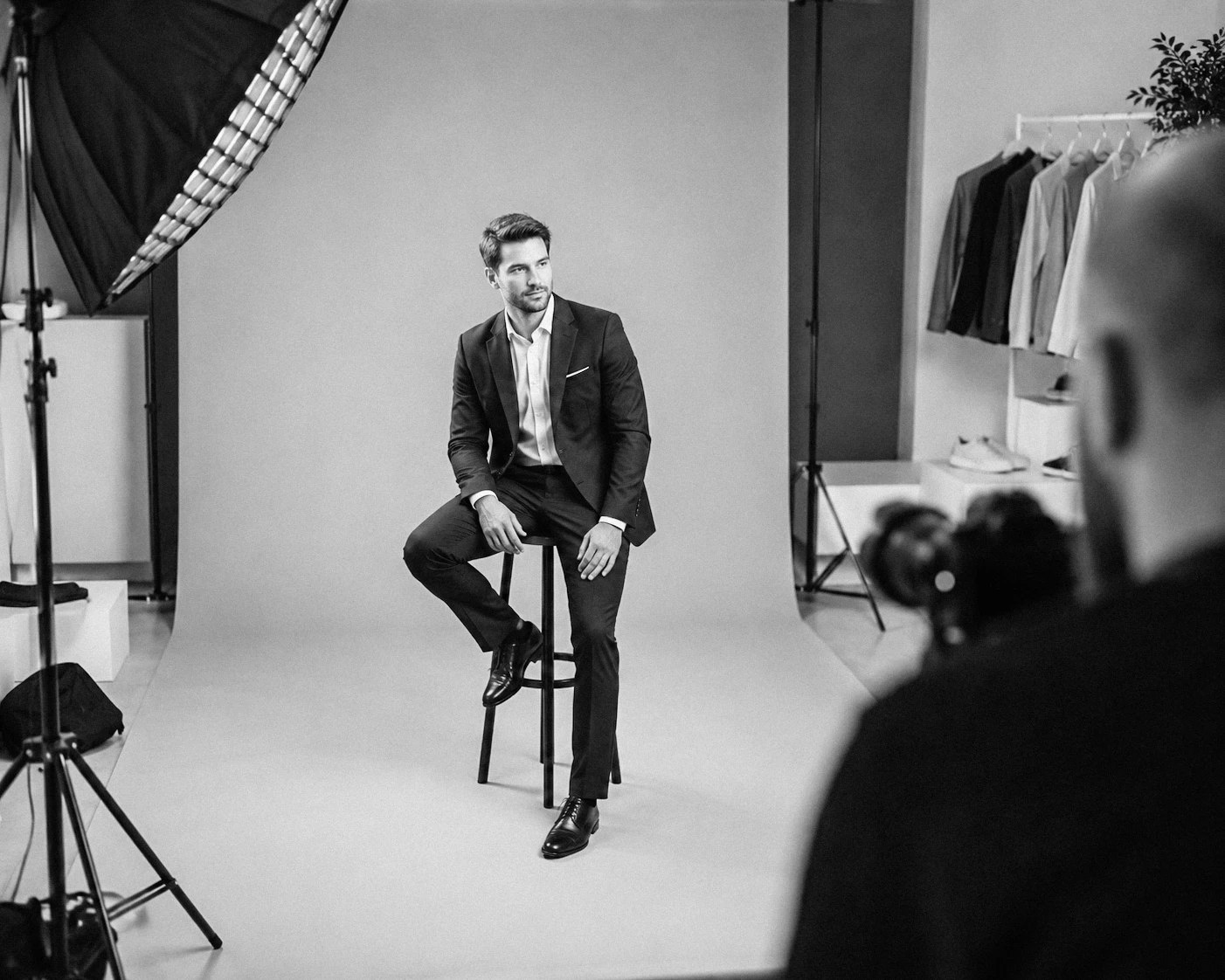
There are situations when preparing your outfit and taking photos on your own becomes more complicated than it should be.
This usually happens when photos need to be consistent across an entire team, when they are created for a company website, or when it is important that all portraits follow the same style and level of professionalism.
In these cases, a professional approach helps align everything, from lighting and composition to wardrobe, ensuring a consistent and polished result without the feeling that the photos were taken under different conditions.
A professional studio allows every detail to be controlled, so the final image truly works in favor of your brand.
FAQ
Do I need to buy new clothes for a photoshoot?
No. In most cases, the best choice is what you already have in your wardrobe. Pieces you feel confident and professional in usually work best.
How can I know if my outfit will look good on camera?
If you are unsure, it is often a sign the choice is too complicated. Simple outfits without strong details almost always give the best results.
Should I dress formally if I do not work in a corporate environment?
Not necessarily. Your style should reflect your profession and how you want to be perceived, not make you look overly formal or unnatural.
What colors work best for a business portrait?
Neutral and calm colors such as white, gray, navy, black, and beige are the safest choice because they keep the focus on your face and create a professional look.
Does a business portrait require a suit?
No. What matters is that your outfit looks clean, professional, and aligned with your industry and personal brand.
Business portraits are most often used on company websites, LinkedIn profiles, in presentations, and in everyday professional communication. That means the first impression is often formed based on your photo.
Your choice of wardrobe is not just an aesthetic decision. It directly influences how people perceive you. Good clothing should not draw attention to itself, but support a professional impression and keep the focus on you.
Below are practical tips to help you choose an outfit that looks natural, polished, and professional on camera.
How to Choose an Outfit for a Business Portrait
This is where most people have the wrong idea. What looks good in real life does not always translate well in a photo. Most people want the same thing: to look professional but not stiff, and to leave a strong first impression without overthinking every detail.
A professional look is less about trends or fashion and more about a clean, balanced, and understated appearance that does not distract. The easiest way to approach it is through a few simple principles:
Simple and Proven Combinations
Clothing without bold patterns, complex cuts, or too many details creates a cleaner and more stable look in photos.
Classic shirts, blazers, blouses, and simple pieces almost always work better than trend driven outfits.
Neutral and Calm Colors
White, gray, navy, black, and beige are the safest choices because they keep the focus on your face.
If you want a bit more variation, softer tones like light blue, olive, or burgundy work well, but avoid fluorescent or overly bright colors.
Proper Fit and Cut
Clothing should follow your body shape without being too tight or too loose.
Poor fit is immediately noticeable in photos. Clothes that are too loose can look untidy, while overly tight pieces often appear unnatural and uncomfortable.
Clothing That Does Not Dominate
The goal is not for your outfit to be the main focus of the photo.
A good choice is one you do not think about while being photographed, allowing you to naturally focus on how you present yourself in the frame.
Details That Make a Difference in a Business Portrait
This is where the difference between an average and a truly strong photo is made. It is not about major changes, but small details that affect how clothing looks on camera.
Pay Attention to Wrinkles
Before the shoot, straighten your blazer, shirt, or blouse and check how it sits on your body. The camera often emphasizes creases and imperfections that are barely noticeable in real life.
Collars, Necklines, and Clothing Lines
Shirt collars, necklines, and blazer lines should be neat and symmetrical. Even small misalignments are easy to spot in photos.
Layering and Combining Pieces
If you are wearing multiple layers, make sure everything sits smoothly without twisting. Poorly arranged layers can look messy and distracting.
Subtle Details Instead of Dominant Elements
A simple watch, a slim belt, discreet jewelry, or clean buttons often create a better impression than bold fashion statements. The goal is refinement, not dominance.
Fabric Texture
Natural materials such as cotton, fine wool, and linen usually work better than shiny or synthetic fabrics, which can reflect light in unpredictable ways.
Clothing is just one part of the preparation. Take a look at our complete guide to preparing for a business photoshoot.
Common Mistakes That Ruin a Business Portrait
When preparing for a business photoshoot, the same mistakes appear frequently and can easily affect the overall impression.
Clothing That Does Not Work on Camera
Outfits that look perfectly fine in real life often appear too casual or lack structure in photos.
Relying on Informal Photos
Photos from social events, private situations, or spontaneous moments may feel natural, but they do not convey the level of professionalism expected from a business portrait.
Distracting Details
Bold jewelry, sunglasses, overly dominant fashion elements, or anything that covers the face takes attention away from the most important part of the image, your expression.
Overstyling and Overposing.
When styling or posing is overdone, the result often looks stiff and unnatural.
Forgetting the Purpose of the Photo
This is not a fashion shoot. A business portrait is meant to create a clear, confident, and professional impression.
Business Portraits for LinkedIn, CV, and Company Websites
Your outfit should match the context in which the photo will be used.
LinkedIn profiles, CVs, company websites, and business presentations all require a consistent and professional visual identity.
That is why business portraits are not just nice photos. They are a tool that helps you make a stronger first impression and build trust.
If you want a photo that represents you or your team professionally, business portraits are the most reliable long term solution.
When to Leave Business Portraits to a Professional Studio
There are situations when preparing your outfit and taking photos on your own becomes more complicated than it should be.
This usually happens when photos need to be consistent across an entire team, when they are created for a company website, or when it is important that all portraits follow the same style and level of professionalism.
In these cases, a professional approach helps align everything, from lighting and composition to wardrobe, ensuring a consistent and polished result without the feeling that the photos were taken under different conditions.
A professional studio allows every detail to be controlled, so the final image truly works in favor of your brand.
FAQ
Do I need to buy new clothes for a photoshoot?
No. In most cases, the best choice is what you already have in your wardrobe. Pieces you feel confident and professional in usually work best.
How can I know if my outfit will look good on camera?
If you are unsure, it is often a sign the choice is too complicated. Simple outfits without strong details almost always give the best results.
Should I dress formally if I do not work in a corporate environment?
Not necessarily. Your style should reflect your profession and how you want to be perceived, not make you look overly formal or unnatural.
What colors work best for a business portrait?
Neutral and calm colors such as white, gray, navy, black, and beige are the safest choice because they keep the focus on your face and create a professional look.
Does a business portrait require a suit?
No. What matters is that your outfit looks clean, professional, and aligned with your industry and personal brand.
Latest Articles.
oshtrō studio
Thoughts, ideas, and perspectives on design, simplicity, and creative process.