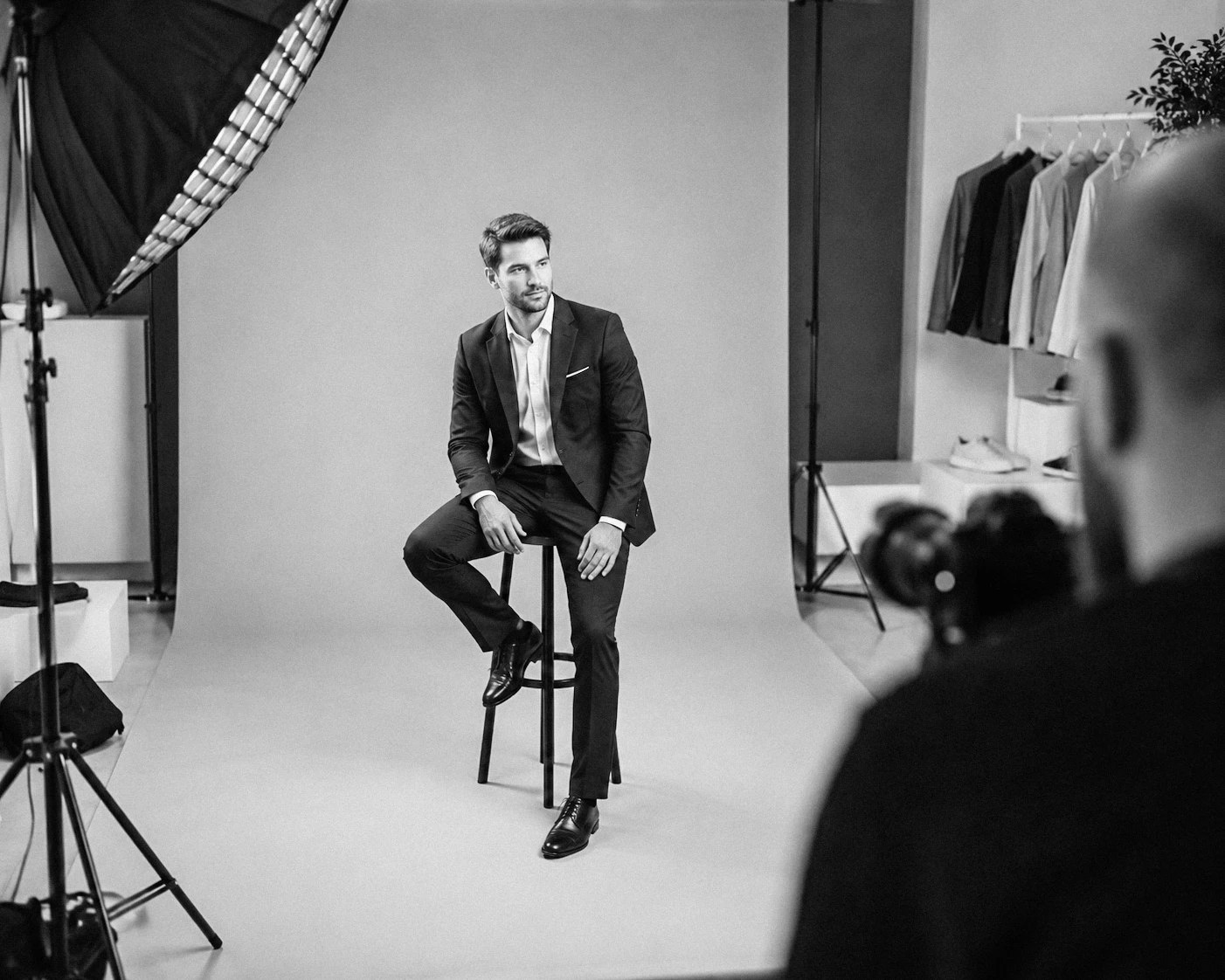
Should You Include a Photo on Your CV?
A professional photo on your CV is not mandatory, but it can help create a stronger first impression. Learn when to include one, when to leave it out, and what makes the best type of CV photo.
Date
/
Category
Portrait
Portrait
/
Writer
Milos Bulatovic
Milos Bulatovic

When creating your first CV, one of the most common questions is this — should you include a photo on your resume?
The answer is not completely straightforward, because there is no universal rule that applies in every situation. In some industries and markets, a photo can be a significant advantage, while in others it may be completely irrelevant.
Is a Photo on a CV Mandatory?
No, including a photo on your CV is not mandatory.
There is no rule that requires every candidate to have a photo on their resume. However, in certain situations, a high-quality professional photo can positively influence the first impression you leave on a recruiter or employer.
The important thing is that the photo should work as an advantage — not as something that creates a negative impression.
If you do not have a suitable photo, it is better not to include one at all than to use an informal, outdated, or unprofessional image.
When Is It Recommended to Include a Photo on Your CV?
A photo is most commonly recommended when applying for jobs that involve direct interaction with people, clients, or public-facing roles.
For example:
marketing
sales
hospitality
hotel management
public relations
reception and front desk roles
education
business development
management
In these fields, professional appearance and first impressions often play a larger role.
Also, if you already have a high-quality professional portrait, you can use it even if the position is not directly related to working with people.
When Is It Better to Skip a Photo?
If you do not have a professional-quality photo, it is better to skip this step entirely than to use a selfie, a travel photo, or an outdated image that no longer reflects your current appearance.
In technical fields such as IT, administration, programming, and similar industries, the focus is much more on skills, experience, and results than on a profile photo.
What Makes a Good CV Photo?
If you decide to include a photo, it should be professional, clear, taken against a neutral background, and paired with appropriate clothing.
You can read more about what a professional CV photo should look like in our dedicated blog post on the topic.
Does a Photo on a CV Create a Psychological Effect?
Yes — first impressions are often formed very quickly.
A photo on your CV can help you appear trustworthy, professional, and approachable even before the employer reads the rest of your resume.
A strong business portrait communicates confidence, professionalism, and credibility. On the other hand, a poor-quality photo can create the opposite effect. Selfies, bad lighting, or awkward poses may leave an unprofessional impression and reduce the overall quality of your application.
That’s why a photo should never feel like a random detail.
Are There Biases Related to CV Photos?
Although physical appearance should not influence hiring decisions, in practice it sometimes does.
Consciously or unconsciously, people may form opinions based solely on a photograph. That is exactly why many international companies and job markets are increasingly removing the option to include photos in CVs.
The goal is to reduce bias and keep the focus entirely on a candidate’s qualifications and experience.
Because of this, it is important to evaluate the market, industry, and employer expectations before deciding whether to include a photo.
The Difference Between a CV Photo and a Business Portrait
Many people assume these are the same thing, but there is an important difference.
A CV photo is usually simpler and focused on creating a basic professional impression. Business portraits go a step further. They are designed to represent your professional identity and are often used for LinkedIn profiles, company websites, personal branding, media publications, and professional communication.
If you want a photo that can be used across multiple professional platforms, a professional business portrait is a much stronger long-term solution.
A professional CV photo is often the first step toward building a more serious personal brand.

Business Portraits for LinkedIn, CVs, and Personal Branding
If you want a more confident and professional presentation of yourself, high-quality business portraits can make a significant difference.
When the lighting, pose, facial expression, and photo retouching are done professionally, the result looks polished, modern, and trustworthy — exactly the impression you want to create in a professional environment.
A professional portrait is not useful only for your CV, but also for:
your LinkedIn profile
your company website
personal branding
PR and media publications
business presentations
public speaking and professional appearances
FAQ
Is a photo on a CV mandatory?
No, a photo is not mandatory, but in certain industries it can help create a stronger first impression.
Can I use a selfie for my CV?
It is not recommended. Selfies often appear unprofessional and may leave a poor impression on employers.
Is a photo necessary for LinkedIn?
Yes. A LinkedIn profile without a high-quality photo often feels incomplete and less professional.
Is the same photo suitable for both a CV and LinkedIn?
It can be, but professional business portraits usually deliver much better results because they are designed to work both for CVs and personal branding.
When Is It Better Not to Include a Photo on Your CV?
If you do not have a high-quality professional photo, or you are applying for jobs in markets where CVs are typically submitted without a picture, it is better to leave the photo out.
When creating your first CV, one of the most common questions is this — should you include a photo on your resume?
The answer is not completely straightforward, because there is no universal rule that applies in every situation. In some industries and markets, a photo can be a significant advantage, while in others it may be completely irrelevant.
Is a Photo on a CV Mandatory?
No, including a photo on your CV is not mandatory.
There is no rule that requires every candidate to have a photo on their resume. However, in certain situations, a high-quality professional photo can positively influence the first impression you leave on a recruiter or employer.
The important thing is that the photo should work as an advantage — not as something that creates a negative impression.
If you do not have a suitable photo, it is better not to include one at all than to use an informal, outdated, or unprofessional image.
When Is It Recommended to Include a Photo on Your CV?
A photo is most commonly recommended when applying for jobs that involve direct interaction with people, clients, or public-facing roles.
For example:
marketing
sales
hospitality
hotel management
public relations
reception and front desk roles
education
business development
management
In these fields, professional appearance and first impressions often play a larger role.
Also, if you already have a high-quality professional portrait, you can use it even if the position is not directly related to working with people.
When Is It Better to Skip a Photo?
If you do not have a professional-quality photo, it is better to skip this step entirely than to use a selfie, a travel photo, or an outdated image that no longer reflects your current appearance.
In technical fields such as IT, administration, programming, and similar industries, the focus is much more on skills, experience, and results than on a profile photo.
What Makes a Good CV Photo?
If you decide to include a photo, it should be professional, clear, taken against a neutral background, and paired with appropriate clothing.
You can read more about what a professional CV photo should look like in our dedicated blog post on the topic.
Does a Photo on a CV Create a Psychological Effect?
Yes — first impressions are often formed very quickly.
A photo on your CV can help you appear trustworthy, professional, and approachable even before the employer reads the rest of your resume.
A strong business portrait communicates confidence, professionalism, and credibility. On the other hand, a poor-quality photo can create the opposite effect. Selfies, bad lighting, or awkward poses may leave an unprofessional impression and reduce the overall quality of your application.
That’s why a photo should never feel like a random detail.
Are There Biases Related to CV Photos?
Although physical appearance should not influence hiring decisions, in practice it sometimes does.
Consciously or unconsciously, people may form opinions based solely on a photograph. That is exactly why many international companies and job markets are increasingly removing the option to include photos in CVs.
The goal is to reduce bias and keep the focus entirely on a candidate’s qualifications and experience.
Because of this, it is important to evaluate the market, industry, and employer expectations before deciding whether to include a photo.
The Difference Between a CV Photo and a Business Portrait
Many people assume these are the same thing, but there is an important difference.
A CV photo is usually simpler and focused on creating a basic professional impression. Business portraits go a step further. They are designed to represent your professional identity and are often used for LinkedIn profiles, company websites, personal branding, media publications, and professional communication.
If you want a photo that can be used across multiple professional platforms, a professional business portrait is a much stronger long-term solution.
A professional CV photo is often the first step toward building a more serious personal brand.
Business Portraits for LinkedIn, CVs, and Personal Branding
If you want a more confident and professional presentation of yourself, high-quality business portraits can make a significant difference.
When the lighting, pose, facial expression, and photo retouching are done professionally, the result looks polished, modern, and trustworthy — exactly the impression you want to create in a professional environment.
A professional portrait is not useful only for your CV, but also for:
your LinkedIn profile
your company website
personal branding
PR and media publications
business presentations
public speaking and professional appearances
FAQ
Is a photo on a CV mandatory?
No, a photo is not mandatory, but in certain industries it can help create a stronger first impression.
Can I use a selfie for my CV?
It is not recommended. Selfies often appear unprofessional and may leave a poor impression on employers.
Is a photo necessary for LinkedIn?
Yes. A LinkedIn profile without a high-quality photo often feels incomplete and less professional.
Is the same photo suitable for both a CV and LinkedIn?
It can be, but professional business portraits usually deliver much better results because they are designed to work both for CVs and personal branding.
When Is It Better Not to Include a Photo on Your CV?
If you do not have a high-quality professional photo, or you are applying for jobs in markets where CVs are typically submitted without a picture, it is better to leave the photo out.
Latest Articles.
oshtrō studio
Thoughts, ideas, and perspectives on design, simplicity, and creative process.